
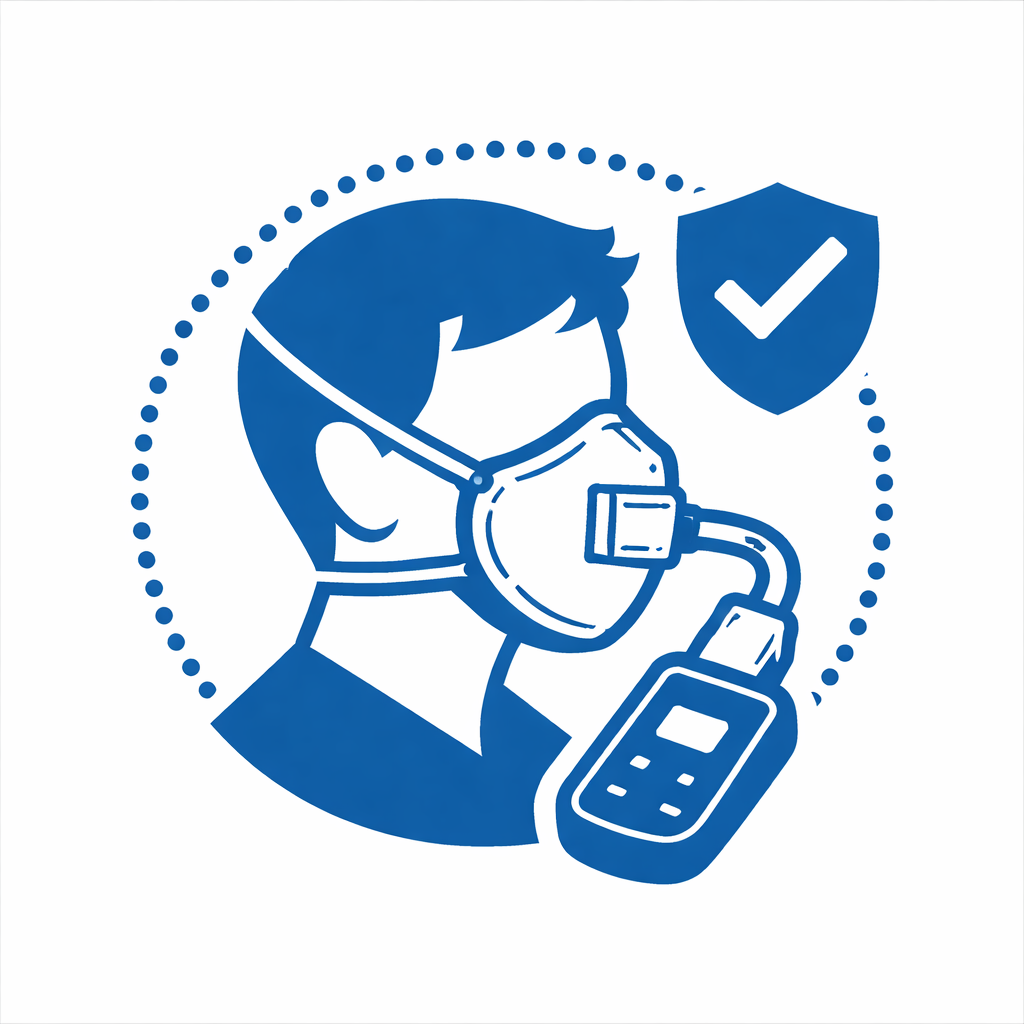
Respiratory surveillance programs are a critical component of workplace safety for employers whose operations involve airborne hazards, respiratory irritants, or environments requiring the use of tight-fitting respirators. WorkingWell’s respiratory surveillance services are designed to help employers meet Occupational Safety and Health Administration (OSHA) requirements while protecting employee health and supporting operational continuity. Our programs integrate clinical oversight, standardized screening tools, and both qualitative and quantitative respirator fit testing into a cohesive, compliant process.
OSHA’s Respiratory Protection Standard, 29 CFR 1910.134, requires employers to establish and maintain a written respiratory protection program whenever respirators are necessary to protect employee health. This includes medical evaluations, fit testing, and ongoing program administration. WorkingWell supports employers at each of these touchpoints by providing clinical services that align with regulatory guidance while minimizing disruption to the worksite.
A foundational element of any respiratory surveillance program is the OSHA Respirator Medical Evaluation Questionnaire. This questionnaire is mandated by OSHA and must be reviewed by a licensed healthcare professional before an employee is fit tested or required to wear a respirator. WorkingWell administers and clinically reviews these questionnaires to determine medical clearance, identify potential restrictions, and ensure employees can safely use respiratory protective equipment.
The medical evaluation process focuses on identifying cardiovascular, pulmonary, and systemic conditions that could be exacerbated by respirator use. Factors such as shortness of breath, prior lung disease, cardiac history, and tolerance of physical exertion are evaluated in accordance with OSHA guidance. When indicated, follow-up clinical evaluations are coordinated to ensure appropriate medical clearance decisions are made.
Once medical clearance is established, respirator fit testing is performed to confirm that the selected respirator provides an adequate seal for the individual employee. WorkingWell offers both qualitative and quantitative fit testing, allowing employers to select the method that best aligns with their risk profile, workforce needs, and internal safety policies.
Qualitative fit testing is a pass-fail method that relies on the employee’s sensory response to a test agent, such as saccharin or Bitrex. This method is commonly used for half-mask respirators and is appropriate in many occupational settings where assigned protection factors meet OSHA thresholds. Qualitative testing is efficient, cost-effective, and widely accepted under OSHA standards when performed correctly.
Quantitative fit testing, by contrast, uses specialized instrumentation to numerically measure the amount of leakage into the respirator. This method provides objective data and is often preferred in higher-risk environments, for full-face respirators, or for employers seeking a higher level of documentation and precision. Quantitative testing is fully compliant with OSHA requirements when conducted using approved protocols.
For quantitative fit testing, employers are responsible for providing the appropriate respirator-specific adapters required to connect the employee’s respirator to the testing equipment. This requirement ensures compatibility with the respirator models used in the workplace and allows testing to be conducted accurately and efficiently. WorkingWell’s clinical teams will coordinate in advance to confirm adapter requirements and testing readiness.
All fit testing services are conducted by trained personnel following OSHA-approved procedures, with careful attention to documentation and recordkeeping. Fit test results are recorded and maintained in accordance with regulatory standards, supporting audit readiness and ongoing program compliance. Employers receive clear documentation that can be incorporated into their written respiratory protection program.
Respiratory surveillance is not a one-time activity. OSHA requires re-evaluation and repeat fit testing at least annually, as well as whenever there are changes in respirator type, facial structure, or medical status that could affect respirator fit. WorkingWell supports recurring surveillance needs through scheduled programs, on-site services, and clinic-based testing options.
From an operational perspective, a well-managed respiratory surveillance program reduces risk, supports workforce readiness, and demonstrates an employer’s commitment to safety and regulatory compliance. Early identification of medical limitations and poor respirator fit can prevent injuries, reduce lost work time, and mitigate regulatory exposure.
WorkingWell partners closely with employer safety teams, human resources, and environmental health professionals to align respiratory surveillance services with internal policies and job-specific hazard assessments. Our approach emphasizes consistency, clarity, and defensible clinical decision-making rooted in OSHA guidance and best practices.
By integrating OSHA respiratory questionnaires, qualitative and quantitative fit testing, and ongoing clinical oversight, WorkingWell delivers a comprehensive respiratory surveillance solution that supports compliance while prioritizing employee health. Employers benefit from a structured, repeatable process that can scale across locations and adapt to evolving workplace risks, ensuring respiratory protection programs remain effective and audit-ready over time.